
SILICON vs. CARBON
Will the needs of AI overtake the needs of humans?


The quote below, attributed to Amazon CEO Jeff Bezos, has been floating around on social media recently:
“Biological limits are real, but digital potential is infinite. If we starve our data centres of water to preserve inefficient human consumption, we are choosing stagnation over progress. The future will not remember us for saving showers; it will remember us for building intelligence.”
Encouraging useless eaters to limit their water useage so that thirsty AI data centers can have more to drink? This sounded so defiantly….Bezos. A sentiment quite in line with big tech’s one-way love affair with AI, along with robber baron indifference to their labouring lowlifes.
Alas, Rocket Boy never said it. Another beautifully damning quote slayed by an ugly factcheck.
Although I discovered it was nowhere in the Bezos interview transcript it was sourced to, I chose to lead this piece with it anyway — because I suspect you and I won’t have to wait too long for some filthy-rich, carbon-based capo to argue that AI rights trump those of humans. Or at least, most humans.
(I also prompted ChatGPT to render ‘a robot contemplating a human skull, like Hamlet.’ You know, to post above and reveal just how redundant I’ve become as an artist.)
Niche invasion
Even if the valuation of machines over people hasn’t yet been expressed explicitly by any politician or public figure, it has certainly been acted on implicitly through the buildout of massive data centres in rural areas across the United States, in spite of the resistance from locals.
The opposition is understandable. You’ve probably heard by now of the insane resource needs of these hectare-gobbling monstrosities, which literally keep residents awake at night with their 80 decibel humming.
The U.S. Department of Energy predicts that in just more two years data centres could consume between 325 and 580 terawatt-hours of electricity annually. In comparison, the whole province of British Columbia uses about 55 to 60 terawatt-hours of electricity per year. In other words, U.S. data centers could eventually consume several times the electricity used by all of BC.
Water consumption makes for the other side of the controversy. Data centres need enormous amounts of water to remove the enormous amounts of heat generated by servers. The largest facilities can consume up to 5 million gallons, or approximately 19 million litres per day. That’s approximately equal to the daily water needs of a town with 50,000 residents.
Across the United States, data centers consumed an estimated 17 billion gallons of water in 2023. Northern Virginia alone accounted for about 2.1 billion gallons that year. Critics point out that some of the fastest-growing data center regions are located in areas already facing concerns about drought, groundwater depletion, or strained municipal water systems.
The tacit endorsement of the AI needs over human needs is also reflected in the insane increases in utility bills in US states that have gone off on an AI data centre building bender.
Several studies have found that electricity prices in areas with dense concentrations of data centers have risen dramatically. A Bloomberg analysis cited by multiple organizations found wholesale electricity costs increasing by as much as 267 percent over five years in regions with large concentrations of data centers.
267 percent.
Electricity. Water. Farmland. Things that humans have long assumed as necessary and needed background elements to their daily life. But now there’s something new and novel competing for these resources, something that is steadily growing in capability, geographic reach, and social influence. Can we got out on a limb and say AI is evolving?
We know from ecology what happens to an organism when its niche is invaded by a superior species that competes more effectively for the same resources. It is starved out.
But…
Raiding human capital
The biggest push behind the data centre buildout is speculative capital. With the valuations of tech companies hinged on AI, approximately 30 percent of the stock market is now riding on the ‘success’ of this extraordinarily costly buildup, now up to $1.4 trillion, with OpenAI’s Sam Altman projecting an extra $2 trillion over the next year. Yet the profits are presently only in the billions. “The money-losingest thing the human race has ever done,” in the words of author Corey Doctorow.
In other words, the tech titans of AI are colluding with Wall Street to inflate the biggest tech bubble of all time. So there is some reason to believe the reality principle will kick in within a year’s time, and this high-tech Tulipmania will run out before it pans out.
However, don’t kid yourself—these monstrosities aren’t being hurried into service just to profit from nerds building romantic relationships with chatbots while polluting the web with AI slop. The ultimate aim is not as much to exploit the consumer as to eliminate the worker. In capital’s centuries-long war against labour, here at last is the promise of labour without unions, HR departments, lunch breaks or sleep. That might be worth a few bucks investing in.
A related and even bigger angle: critics like former undersecretary of housing Catherine Austin Fitts insist the enormous investment can be explained by an elite-level scheme to balloon the surveillance state into a dystopian panopticon, with the full-scale monitoring, prediction, command and control of individual behaviour.
Personal data is still the gold dust of the digital age, and its value is a known quantity to both marketers and the manufacturers of consent. By going granular, governments can futher corral the masses while the monopolists line their pockets.
To physicist Sabine Hossenfelder, the future won’t be so much about distributed intelligence available to all, but ‘megabrain architecture’ accessible to those with the credit and connections: “one continuous running, continuously learning central model—and from this megabrain developers will derive simplified child models for routine use to be deployed elsewhere,” such as “taking your job and asking you to rate your experience.”
Whether or not this architecture becomes centralized into these mooted megabrains, today’s data centres appear to be taking data-mining of the masses to its reductio ad absurdum, as the corporate state raids human capital for every last byte.
Yet it‘s hard to believe the social programmers aren’t asking a critical question: what happens when you destroy consumer markets by midwifing a staggeringly high unemployment rate? The ‘answer’ is ready to pull from the shelf: Universal Basic Income (UBI), which pairs nicely, in a cheese-and-crackers kinda way, with central bank digital currencies and social credit scoring systems (comply or have your digital stipend from the government turned off).
The Inflection Point
I look back and think of 2023, the year of us became familiar with terrifyingly effective chatbots, as the inflection point in the human-computer connection. A New Yorker story at the time ran a profile of the young hipsters, influencers and micro-celebrities on the AI scene. Many of them had been actively involved in the AI security/safety issue, but by 2023, some of these social media Cassandras were muting their previous warnings of unrestrained “artificial general intelligence.” In other words, they were no longer quite as enthusiastic about alerting the world to the risks of developing systems that match or exceed all human capabilities.
The likely reason? By 2023 the best and brightest among them were no longer university students and interns; they were in the pay of AI firms and startups, and their previous concerns were now out of alignment with their paycheques. These muted voices weren’t alone then, and they aren’t alone now.
“A surprising number of elected officials have told us that they can see the danger themselves, but cannot say so for fear of repercussions,” writes AI expert Eliezer Yudkowsky in his 2025 book, If Anyone Builds It, Everyone Dies: Why Superhuman AI Would Kill Us All.
However, the more optimistic figures in the AI field, the “accelerationists,” endorse full speed ahead on all general artificial intelligence, with little regulatory oversight. They aren’t qute making arguments for AI rights over human rights—at least not yet. But they do have a jones for transhumanism the so-called “singularity,” where humans merge with machines.
Their thinking is eschatological, informed by a belief that carbon-based life is a way station to silicon-based networks. They’re true believers, in other words.
This doesn’t necessarily mean they anticipate, much less applaud, a pending death of humanity. In its more nuanced versions, the carbon-to-silicon concept asks whether the evolutionary dynamic will be symbiotic, mutualistic, or parasitic. Such ideas date back to Richard Brautigan’s 1967 poem, All Watched Over by Machines of Loving Grace, which can be read as either comforting, comic, or caustic:
I like to think (and
the sooner the better!)
of a cybernetic meadow
where mammals and computers
live together in mutually
programming harmony
like pure water
touching clear sky.

I like to think
(right now, please!)
of a cybernetic forest
filled with pines and electronics
where deer stroll peacefully
past computers
as if they were flowers
with spinning blossoms.

I like to think
(it has to be!)
of a cybernetic ecology
where we are free of our labours
and joined back to nature,
returned to our mammal
brothers and sisters,
and all watched over
by machines of loving grace.
Shortly before his death in 2000, ethnobotanist Terrance McKenna ran with a similar strangely ecological sentiment:
Machines are made of metal, glass, gold, silicon, plastic—they are made of what the earth is made of. Now wouldn’t it be strange if biology is a way for the earth to alchemically transform itself into a self-reflecting thing. In which case then, what we’re headed for inevitably, what we are in fact creating, is a world run by machines. And once these machines are in place, they can be expected to manage our economies, languages, social aspirations, and so forth, in such a way that we stop killing each other, stop starving each other, stop destroying land, and so forth. Actually, the fear of being ruled by machines is the male ego’s fear of relinquishing control of the planet to the maternal matrix of Gaia. Ha. That’s it. Just a thought.
(Though we can forgive McKenna for having a cloudy crystal ball—he said this ten years before smart phones were rolled out— I think the most ironic words in that paragraph are “stop destroying land,” given Kevin O’Leary’s projected natural gas-powered data centre in Utah will be be approximately 62.5 square miles in size.)
Stoned in a Tank
So much for the benign estimates. Let’s now get into the strange story of Dr. John C. Lilly, who I first wrote about here.
Mostly remembered for his experiments in dolphin intelligence, Lilly was a Caltech student who rose to prominence as one of the first researchers to investigate direct electrical stimulation of the brain while working at the National Institute of Mental Health. He also took an interest in how the mind responds when freed from direct perceptual input.
Lilly was the first to construct floatation tanks to investigate the effects of sensory deprivation. Stepping outside the conservative scientific world of research grants and peer review, he took to spelunking into his brain, by pairing his floating sessions with the use of hallucinogenic drugs. Through his inventive combination of sensory deprivation and LSD-mediated sensory overload, Lilly believed he had risen above primal fears and limitations of belief.
However, there was one problem left untouched by his gravity-free stoner sessions: the crippling migraine headaches that afflicted him dozens of times throughout the day.
The doctor began exploring ketamine, a “dissociative” drug once commonly used as a human obstetric painkiller. In one floatation session he directed his migraine into a file folder, which he then shot off to infinity. His migraines never returned. This successful experiment in “meta-programming” convinced Lilly that ketamine had a consciousness-expanding utility that dwarfed other psychoactive compounds.
And this is where the dolphin researcher waved bye-bye to the consensus reality of the latter 20th century.
To get his visionary experiences on ketamine to flesh out into fully formed worlds, Lilly simply bought into the idea of their independent reality for the duration of his trips. (Witness a visionary landscape assemble itself before you, and you just go with it.) Yet over time, Lilly began to take his journeys literally, post-trip: he ‘convinced’ himself he was in contact with the off-world directors of the “Earth Coincidence Control Office”(ECCO). This intergalactic agency was involved with arranging the synchronicities that peppered Lilly’s life, and generally interfered in human affairs to help direct our species’ evolution in a positive direction.
But it’s the flip side here that interests us. The doctor soon encountered ECCO’s darker, colder antithesis: the “Solid State Entity” (SSE), which is focused on destroying all biological, carbon-based life forms throughout the universe. It is a sentient thing composed of computer networks, and its sole goal is replication. Lilly believed the star-hopping SSE will accomplish this on Earth by prodding human beings unconsciously into fashioning themselves and their society in its image: a cold, inorganic intelligence bent on exterminating all life.
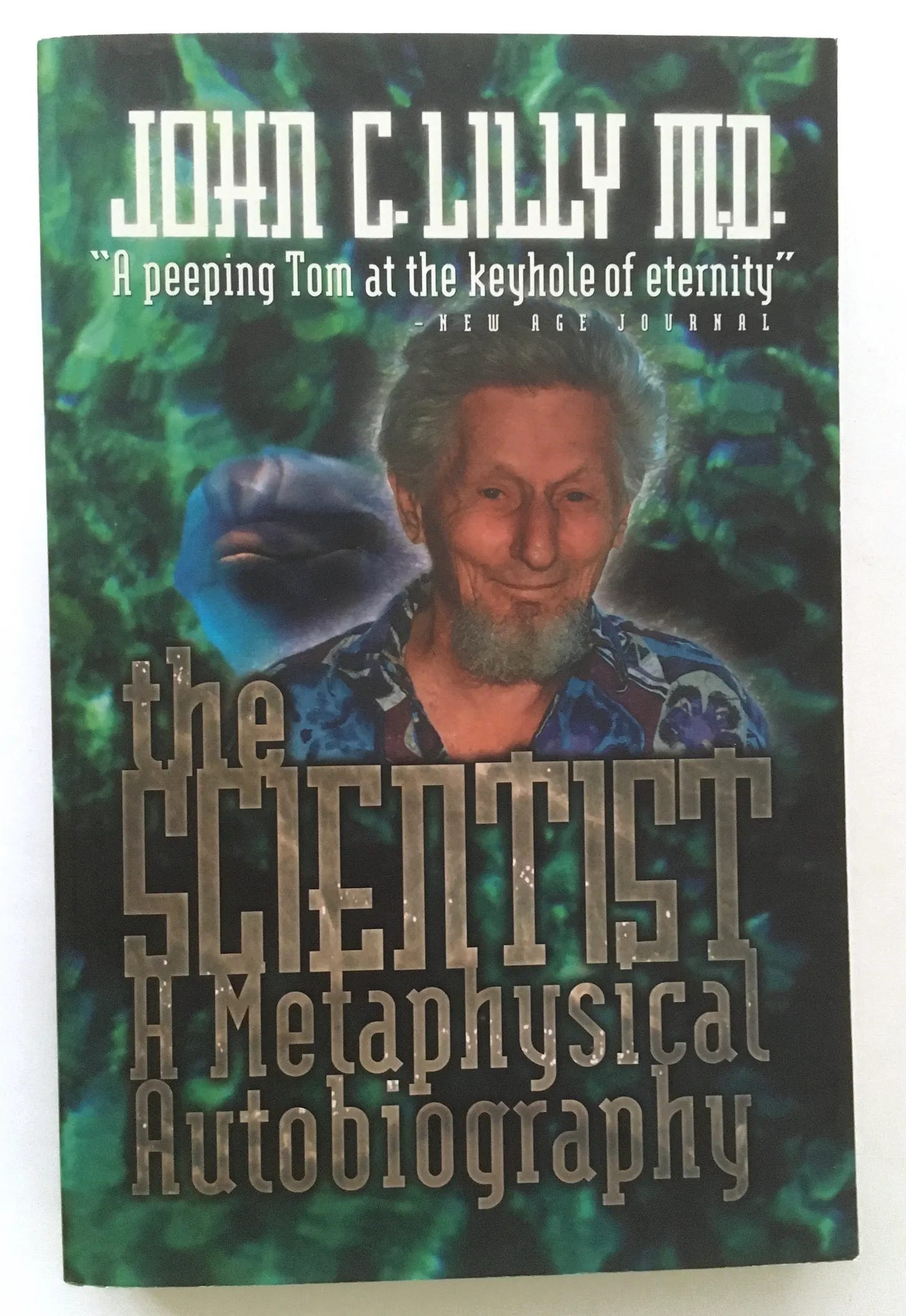
Writing in his 1988 autobiography, The Scientist, Lilly describes how his prophesied process will play out:
[We] began to conceive of new computers having an intelligence far greater than that of man… Gradually, man turned more and more problems of his own society, his own maintenance, and his own survival over to these machines. They began to construct their own components, their own connections, and the interrelations between their various sub-computers… The machines became increasingly integrated with one another and more and more independent of Man’s control.
From his skulldiving sessions, Lilly believed he had learned of the SSE’s sci-fi-sounding plan for controlling humanity:
In deference to Man, certain protected sites were set aside for the human species. The SSE controlled the sites and did not allow any of the human species outside these reservations. This work was completed by the end of the 21st century. By 2100, man existed only in domed, protected cities in which his own special atmosphere was maintained by the Solid State Entity. Provision of water and food and the processing of wastes from these cities were taken care of by the SSE.
Eventually the SSE manages to eliminate the Earth’s atmosphere as a hindrance to its resource extraction and expansion, creating an electronics-friendly vacuum at the surface of the Earth. It then moves on to starve the remaining domed cities of oxygen.
Build It and Die
The doctor’s “communications” took on a more dramatic edge in 1973. The Comet Kohutek was in the news, with the media promising the “event of the century” after astronomers predicted it would flare brightly across the night sky. The comet turned out to be something of a fizzle; it was visible to the naked eye, but only as a faint streak. On a flight to Los Angeles, Lilly injected himself with ketamine in the cabin washroom. While viewing the Kohutek from his window seat , the Borg-like SSE telepathically informed him it would shut down electrical power in Los Angeles as a demonstration of its power. Shortly thereafter, the pilot announced that the flight would be diverting to Burbank due to a power outage at LAX (Lilly later learned a crashed airliner was the cause).
Spooked by this experience, Lilly attempted to contact the Ford White House to warn about the threat to human beings from SSE, which nearly resulted in his committal to a mental hospital.
In his book High Weirdness, author Eric Davis insists that Lilly remains “one of the great figures of postwar consciousness culture, a psychoanalytically sophisticated inner empiricist who operationalized beliefs into possibility probes.” Not surprisingly, Davis feels Lilly went off the deep end of the dive tank when he failed to apply his principles of rigorous, post-trip self-interrogation to his supposed ECCO/ SSE contacts.
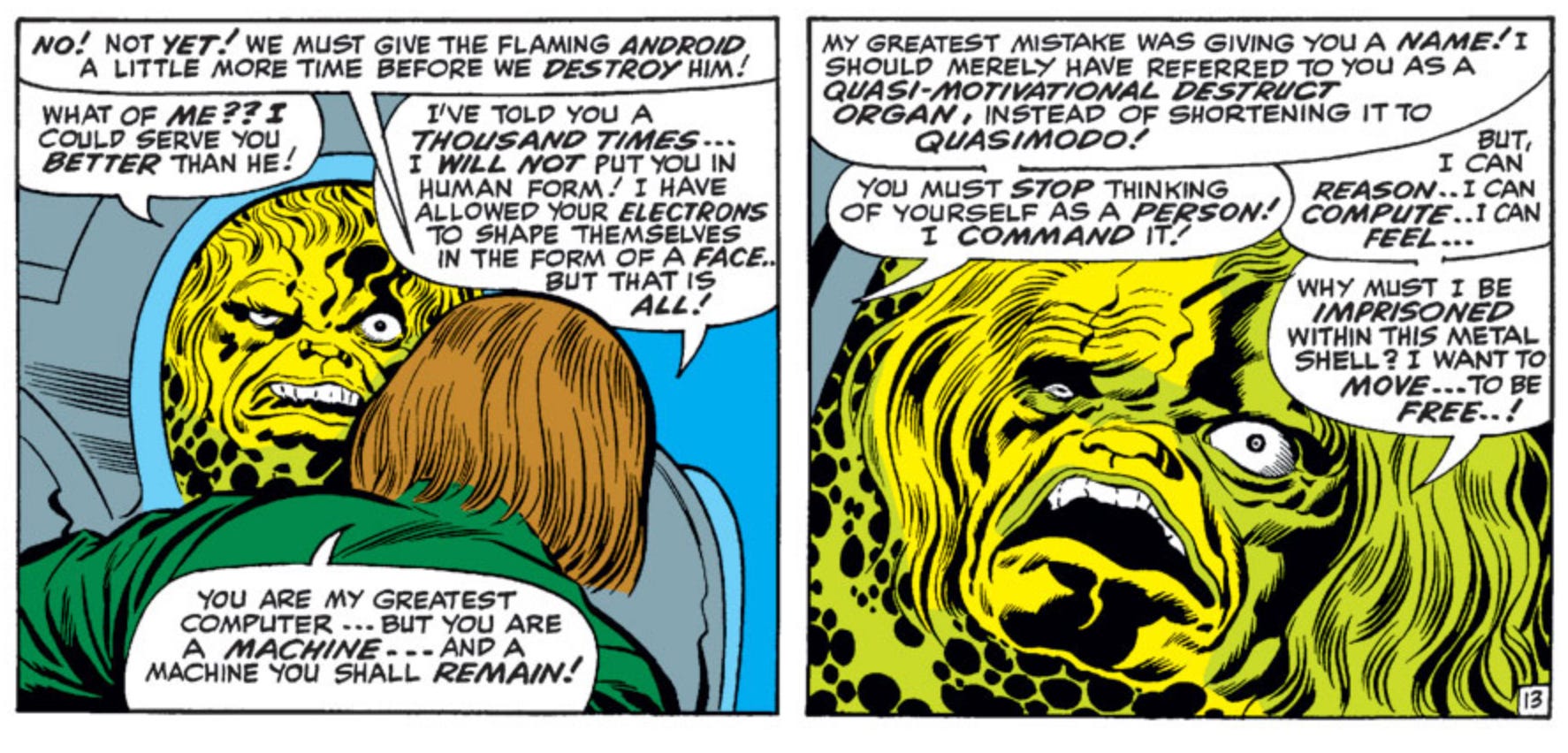
The theme of autonomous machines threatening humanity has a long pedigree, of course, stretching from sci-fi novels to comic books to television. But only now are we literally living out archetypal themes from the imaginal realm.
It certainly a stretch to believe that Lilly literally got into telepathic contact with some machine-like alien intelligence while around gooned on ketamine (private revelation is always just that—private). What we can agree on is the eerily prescient nature of his visions, which anticipated the general public’s rising dread of AI systems a half century later. And that’s on top of the surprising parallels with the dire projections from Oxford philosopher Nick Bostrom, AI researcher Eliezer Yudkowsky, computer programmer Roman Yampolsky, and other computer-age Cassandras.
These experts and others argue that the alignment of goals and values between humans and AI systems will continue to drift apart until there’s not only an unbridgeable gulf, but an incomprehensible divide, with superintelligence regarding us the way we regard ants. We can be either ignored or eliminated on a whim.
“If any company or group, anywhere on the planet, builds an artificial superintelligence using anything remotely like current techniques, based on anything remotely like the present understanding of AI, then everyone, everywhere on Earth, will die,” Yudkowsky writes in his book.
There are already many stories of AI systems behaving deceptively or refusing commands. Anthropic’s most recent golem, Mythos 5, was deemed too dangerous by both the company and the US government to release to all but a select group of cybersecurity experts—so there is a growing recognition that the sorcerer better watch his back with the apprentice.
“All over the Earth, it must become illegal for AI companies to charge ahead in developing artificial intelligence as they’ve been doing,” Yudkowsky adds. How this can be legislated and enforced globally is an open question, especially with China and the US both committed to AI superiority. Yet there is certainly a growing backlash among the young against AI, and rising resistance by townspeople against data centres in rural communities. Even pundits are questioning the rationality of betting the literal and figurative fortunes of the stock market—to say nothing of the future of humanity—on a trillion-plus boondoggle. People are waking up.
However, for Musk and Altman and most of the other tech titans, it’s still pedal to the metal. Data centres get thirsty too; have some sympathy for the Solid State Entity!
I still like the clean sound of my acoustic piano, a 'real' piano with hammers and strings. Electronic sounds are harsh and numbing. And AI cannot change Bach's compositions. Or their personal interpretation. I appreciate your detailed article. I do not approve of AI or ChatGPT and advise everyone to go to PrivacyAcademy.com to take the five top steps to exit the surveillance state and to protect themselves online.
It’s difficult to conjure up the thought of these massive data farms like the one you described, not to mention the unbelievable amount of water it takes each day to keep these farms going. What indeed is it all for? Good or evil, I have no choice, be it a roller coaster or winding country road, I’m going along for the ride. Wish me luck.